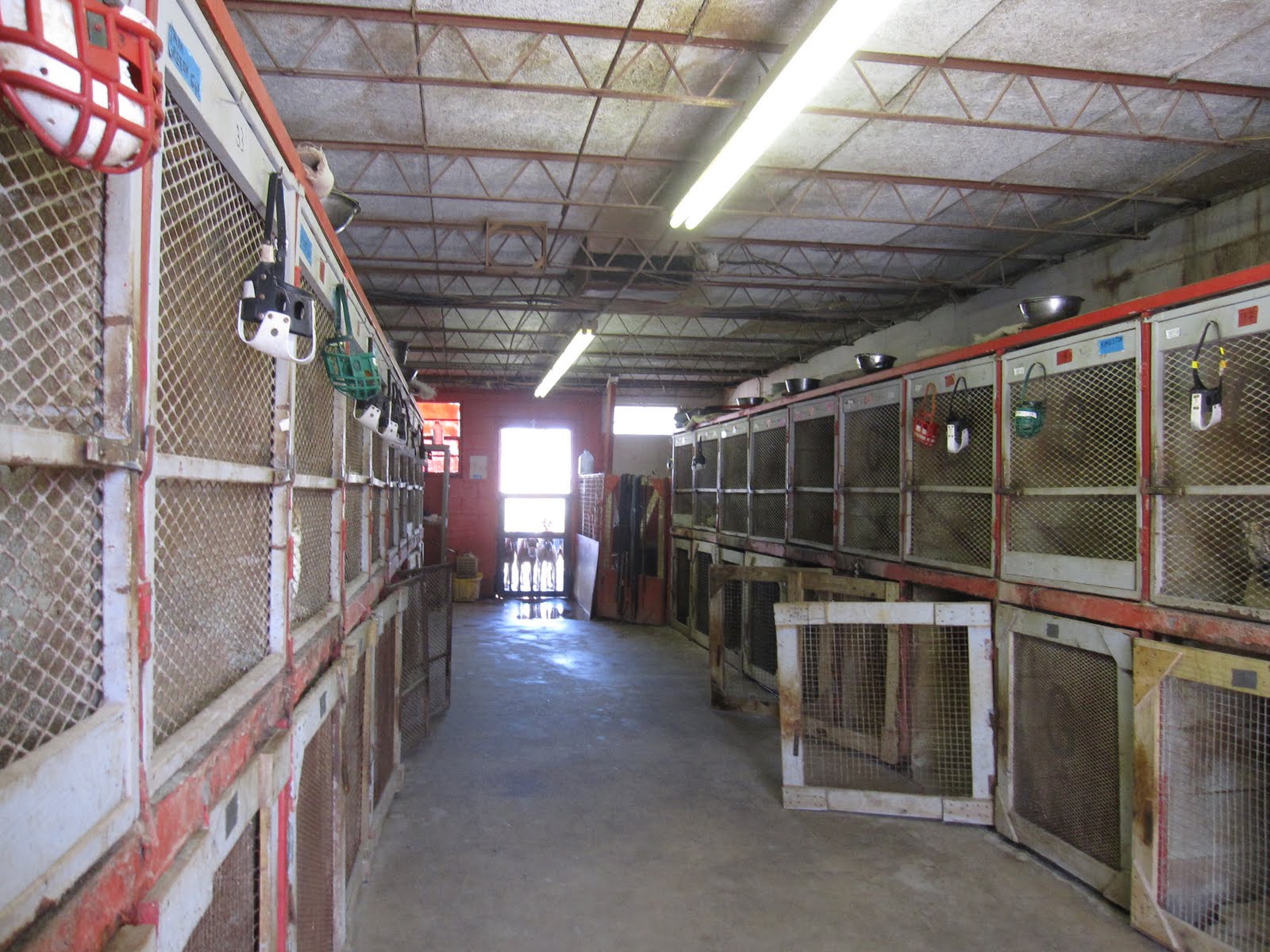
As the number of greyhound tracks
shrinks across the United States, the remaining dog racing facilities are increasingly dependent on "
simulcast" gambling from other states for their survival. This is a dangerous trend that should concern greyhound advocates.
It sounds complicated, but simulcasting is actually very simple. Dog tracks broadcast their races to locations across the country where gamblers can place bets. When a wager is made remotely, it is pooled with the other bets as if the remote gambler was at the track himself.
In some states, gamblers are being allowed to support dog racing even though the decision has already been made that greyhound racing should be outlawed. For example, Massachusetts citizens
overwhelmingly voted to ban all forms of gambling on greyhound races in 2008. Despite this clear vote, lawmakers have ignored part of this humane law and have
are allowing greyhound simulcasting to continue. Working with State Senator Pat Jehlen,
GREY2K USA has filed
legislation to phase out greyhound simulcasting in the Bay State and this
fight is ongoing.
Meanwhile, in Idaho another greyhound simulcasting fight is underway. Led by Ada County Commission
Sharon Ullman and
Greyhound Rescue of Idaho, citizens are asking that a 1996 ban on greyhound racing be fully enforced. In a recent
guest column, Ullman made a compelling case that the law is being broken. In part, her
column reads:
"The Alabama-based Greene Group operators of Les Bois Park are committing a felony every time they simulcast greyhound racing at that facility. Dog racing is illegal in the State of Idaho because of the heinous treatment of the dogs allowed by the Greene Group at their track in Post Falls, where live greyhound racing began in the late 1980’s."
Ullman also
expressed frustration with government officials, who appear to be unwilling to enforce the law.

There is also, however, some good news regarding greyhound simulcasting. Thanks to the hard work of
Citizens Against Greyhound Racing, the Pennsylvania legislature unanimously voted to
prohibit greyhound simulcasting earlier this year. Also, last year a proposal to
legalize greyhound simulcasting was defeated in New Mexico, thanks to the efforts of
Animal Protection of New Mexico, the New Mexico Coalition Against Gambling, and
Greyhound Companions of New Mexico.
As greyhound advocates, we must not rest until all forms of dog racing are outlawed everywhere. Until then, greyhounds will
continue to suffer so that a handful of dog breeders can use them as profit machines.

 Greyhound advocacy should be fun. That may seem like an odd thing to say, because greyhounds are subjected to so much cruelty. Nonetheless, while we fight to end dog racing we should also take time to celebrate greyhounds for who they are: amazing animals that can be sweet, gentle, playful and even goofy.