Showing posts with label Florida. Show all posts

Wednesday, July 18, 2018

Making history for Florida greyhounds


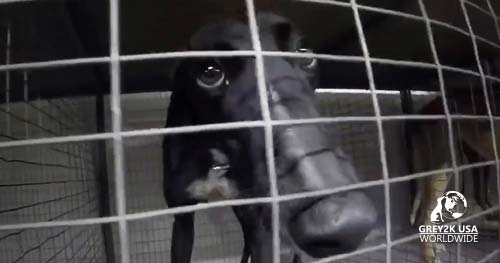
A caged greyhound at Orange Park Kennel Club
By Christine A. Dorchak, President and General Counsel of GREY2K USA Worldwide

History awaits the greyhounds this fall. On Election Day, the voters of Florida will have the opportunity to turn back the hands of time and end dog racing in its most established state. As many as 8,000 lucky greyhounds stand to receive the second chance they deserve, closing out nearly 100 years of exploitation and cruelty.

The first recognized commercial greyhound racetrack in the world was opened in 1919 in California. The Blue Star Amusement Park had an oval track and featured a new invention called the mechanical lure. Created by Owen Patrick Smith, the device was intended to offer a more humane alternative to the traditional use of live rabbits in field coursing. By 1930, sixty-seven "flapping" tracks had opened and closed all across the United States – none of them legal. A bid to force approval of dog racing in Kentucky was brought before the U.S. Supreme Court in 1927, but failed. No state would authorize this new business, even during the height of the Great Depression.

But Florida was different. It became the first state to allow dog tracks to operate legally – as long as it received a piece of the action. In 1931, Sunshine State lawmakers passed a racing bill over Governor Doyle E. Carlton’s veto. By 1935, there were ten licensed tracks in operation, some controlled by known criminals such as Meyer Lansky. Oregon and Massachusetts became the next states to authorize dog racing, in 1933 and 1934 respectively. Although church groups, civic and humane organizations rallied in opposition, the new industry of greyhound racing continued to grow and was legalized in a total of nineteen states by 1989.
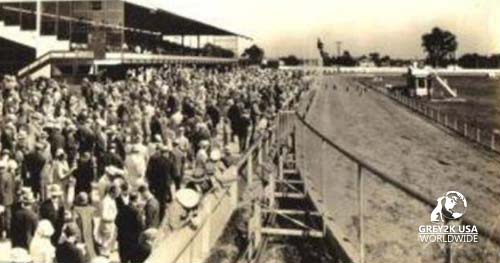
Greyhounds racing at the Tampa race track

Referred to as the “Sport of Queens,” perhaps in reference to Queen Elizabeth I’s promotion of greyhound coursing in the sixteenth century, dog racing sought to promote itself as elite, glamorous and a good time for all, including the greyhounds themselves.Proponents of dog racing in Florida were perhaps the most enthusiastic of all in emphasizing the “sun and fun” to be had at its facilities. Old time movie heartthrobs, entertainers and sports figures such as Joe DiMaggio, Babe Ruth, Janet Leigh (star of Alfred Hitchcock’s “Psycho”) and even Old Blue Eyes himself, Frank Sinatra, made multiple appearances at dog tracks in the Sunshine State. In 1958, Sinatra filmed a movie about a dog track gambler at the Flagler Kennel Club and one year later, he appeared on the cover of the Greyhound Racing Record along with a woman newly crowned as the “Queen of American Greyhound Racing.” Photographed with them was the winning dog in a race named after the famous singer. 

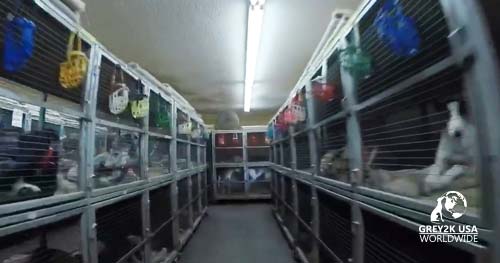
Those days are long gone and the truth about dog racing has now been revealed in official state documents, financial reports and testimony from dog track workers themselves. Kept in warehouse style kennels, in rows of stacked metal cages for 20-23 hours a day, the dogs are fed a diet based on raw, diseased meat. When let out of their cages to race several times a month, they face the risk of serious injury. Broken legs, crushed skulls, snapped necks, paralysis and heat strokes are common. Some dogs have even been electrocuted while racing. According to information gathered by the state’s Division of Pari-Mutuel Wagering, a greyhound dies every three days at Florida’s eleven racetracks.

Caged greyhounds at the Sanford Orlando Kennel Club
Cheating is another hallmark of this industry. Over the past decade, there have been 419 greyhound drug positives, including 68 cocaine positives. Greyhounds have also been found with pain killers and opiates like novocaine and oxymorphone in their systems. Females are routinely given anabolic steroids to build muscle and prevent loss of race days during their heat cycles, a practice which triggers both animal welfare and race fixing concerns.
Thankfully, dog racing is now illegal in 40 states and since 1990, the amount of money wagered on dog racing in the Sunshine State has plummeted by 74%. Tax revenue has declined by 98% and the tracks themselves now lose a combined $34 million. If it were not for a state mandate requiring racetracks to offer a minimum number of races as the platform for other, more popular forms of gambling, this antiquated activity would have ended long ago. Until it does, the state will continue to waste as much as $3.3 million per year regulating a dying industry.  

Statewide polling shows that Florida voters will vote to end dog racing if they are fully informed about its humane and economic problems. You can help the greyhounds by learning learn more about Amendment 13 and by spreading the word that it’s time to set the greyhounds free. 

Monday, September 11, 2017

In Florida Crisis, Greyhound Racers Fail a Moral Test

Devastation from the Great Miami Hurricane of 1926, which destroyed a greyhound kennel

By Carey Theil, Executive Director of GREY2K USA Worldwide


Hurricane Irma has thankfully been downgraded to a tropical storm, and it appears that Florida greyhound race kennels dodged a big bullet. Thousands of greyhounds were in peril due to Irma, after kennel operators chose to ride the storm out instead of evacuate.

The storm hasn't yet passed, but already dog race promoters are hard at work trying to rationalize their reckless decision. Let's set the record straight. It's true that one track reportedly gave kennel operators financial assistance in the days before Irma struck. That's good, and should be applauded. Also, there is no doubt that the greyhound trainers who stayed behind and hunkered down with dogs were brave. Neither of these, though, are actual solutions to a cataclysmic threat.

Some of the Florida greyhound kennels, holding hundreds of dogs, are wooden. If any of these had suffered a direct hit the loss of life would have been enormous. Further, the trainers who stayed behind would have been helpless against a large storm surge. Many Florida kennels were in direct peril of flooding, including the Derby Lane kennel compound which is located only a few hundred feet from Masters Bayou.

One of the essays circulating today claims GREY2K USA is the "face of evil" for raising concerns about the lack of an evacuation plan for greyhounds. The dissertation is disjointed and strange, but does include one self-revelatory paragraph:
"The face of evil told you there was no plan for the greyhounds to be evacuated and they were partially right. There was never a plan to evacuate the greyhounds because the real protectors know you can't evacuate 6000 greyhounds. There was always a plan and that was plan to do what has been done for 90 years. Keep the greyhounds in place, hunker down with them and hope what has worked for so many years works again."
The writer is correct that hunkering down and hoping for the best is what the dog racing industry has always done. It is a deeply irresponsible choice that has caused many dogs to suffer.

In September of 1926 a powerful Category 4 storm commonly referred to as the Great Miami Hurricane devastated South Florida. According to Florida's Hurricane History the greyhound kennels at the Hialeah Race Track were completely destroyed, allowing racing greyhounds to escape. So much life was lost that when the storm passed it pushed water and debris back into Biscayne Bay creating a "huge health problem with all the dead bodies and animals" according to meteorologist Neal Dorst.

Ninety-one years have passed since the Great Miami Hurricane, and the greyhound industry still has no evacuation plan. This is another example of how the industry fails in its most basic obligations to protect the health and welfare of the dogs it uses to make a profit. If people are going to ship thousands of dogs to a state with a long history of cataclysmic hurricanes, they have a moral imperative to come up with a plan for when the storm clouds gather. That plan must be in place months or years in advance. It's not good enough to ignore weeks of warnings, throw up your hands at the last minute, and say an evacuation isn't possible. Nor is it good enough to hunker down and just hope for the best.

On a related note, the handful of people who are defending the greyhound industry should ask themselves if there is any bad act they would not defend. Note that there is no industry discussion today about doing better. There is no self reflection, and no urgency about coming up with a plan for the next time a hurricane hits. Instead they are busy convincing themselves that their reckless approach was somehow justified, while attacking the animal protection community in the process.

It appears that the greyhound industry has another chance. While dog racing continues in Florida, which hopefully will not be for long, the industry must solve this problem. They have had ninety-one years to solve it up to now, yet so far have utterly failed.

Friday, October 14, 2016

Florida is Focus of Global Fight to End Dog Racing


This weekend, Palm Beach County in Florida will become the focus of the global effort to end greyhound racing. Two dozen top animal welfare experts from across the world are joining together in Delray Beach to hold the first ever international conference on greyhound advocacy, named Greyhounds Around the Globe.

Commercial dog racing is now conducted at 146 racetracks in eight countries. Greyhounds routinely suffer racing injuries at these tracks including broken legs, broken necks, dislocations, torn muscles and paralysis. Some dogs die while racing while others are put down due to the severity of their injuries, or simply because of their diminished value as racers. More than 12,000 injuries have been documented in the U.S. alone since 2008, and in Florida a racing greyhound is dying every three days, on average.

In New South Wales, Australia, recent governments report shows that thirty-nine dogs were killed while racing in just over two months, and that 70% of all racing dogs may have been destroyed over the last dozen years, as either puppies or failed racers. At the Canidrome in Macau, the only legal dog track in China, greyhounds receive little or no veterinary care and are routinely killed at a rate of thirty per month. Because there is no adoption program, no dog gets out alive. In the countries of Great Britain, Mexico, Ireland, Vietnam and New Zealand, records are still not publicly disclosed, so the number of greyhound injuries and deaths remain an industry secret.

A worldwide movement has emerged to fight this cruel industry, and we are gradually winning. Grassroots advocates have linked arms with established animal protection groups like The Humane Society of the United States, RSPCA Australia, Animals Australia, Animals Asia, Anima Macau, the British RSPCA and the ASPCA. This coalition is fighting for a phase out of commercial dog racing, while also advocating for key industry reforms.

GREY2K USA Worldwide lobbyist Michael Preston Green declares victory in Arizona
Just in the last year, we have won stunning greyhound protection victories. In May, Arizona became the 40th American state to outlaw greyhound racing. The largest Australian state, New South Wales, voted to prohibit dog racing in August. Although the government has since decided to allow a small remnant of the industry to temporarily survive, dozens of tracks are still slated to close. Also in August it was announced that the last dog track in London, iconic Wimbledon Stadium, is permanently closing. Meanwhile, the Macau Canidrome is in the process of shutting down after the government refused to extend its land lease.

Florida has become the epicenter of this global fight, and humane advocates are starting to win victories in the Sunshine State, too. In March, lawmakers passed a budget proviso requiring the Department of Business and Professional Regulation to report greyhound injuries to the public for the first time. The dogs won again this summer when Seminole County Commissioners approved the Greyhound Protection Act, a local citizens initiative to require greyhound injury reporting, require reporting on the ultimate fate of racing dogs, and eliminate a loophole that exempted greyhounds from County licensing and inspection laws.

We realize our historic conference is taking place only twenty miles from Palm Beach Kennel Club, the preeminent commercial dog track in the world. To its credit, Palm Beach has directed its attention to some humane issues and recently announced a series of adoption events in the month of October. Nevertheless, it is not immune from the culture of cruelty that permeates the greyhound industry. According to state records, 25 dogs have died at Palm Beach since 2013. To ensure the track has a ready supply of racers, hundreds of greyhounds endure lives of confinement, kept in cages barely large enough for them to stand up or turn around for long hours each day.

At the conclusion of our conference, our coalition will send a letter to the heads of states of the eight countries that still host commercial dog tracks. We will urge them to support legislation to end greyhound racing and tell them that dogs deserve better. It is time for this cruelty to end in Florida, the state where it started, and worldwide.

Thursday, May 5, 2016

Injured Greyhound Denied Care at Pensacola Track

Two weeks ago I sent a letter to Pensacola Greyhound Track to express my outrage over the neglect of a dog named Starring Act, who was injured in a dog fight on January 3. After the incident Starring Act was taken back to his cage by a kennel helper, who then tried to reach James Viles, the trainer responsible for the dog. Meanwhile, a second greyhound was fatally wounded and died within moments.

After consulting with track officials, the racing kennel decided against taking Starring Act to a local clinic and instead waited for a track veterinarian to arrive. The dog waited in his cage for more than five hours before being examined.

When a veterinarian finally saw Starring Act, she found that he had "received serious injuries to the neck, right front leg, and left rear leg." She euthanized Starring Act in the racing kennel because "due to the extent of the injuries ... she feared that moving the dog to her office would cause pain and suffering."

Starring Act should have received immediate care. He was failed by his trainer, his kennel, and Pensacola Greyhound Track. In my letter to the track's general manager I wrote:
"As a result of poor decisions that morning by Viles, in consultation with track veterinarian Dr. Hofmesiter and track racing officials, Starring Act was left in his cage for more than five hours before receiving veterinary care. There can be no doubt that Starring Act suffered as a result of these mistakes and was failed by your facility."
I also offered to assist Pensacola Greyhound Track in creating an emergency veterinary care policy, to ensure similar mistakes do not happen again. As of today, I have not received a response.

Finally, it's worth noting that trainer James Viles has a long history of state violations. He has been investigated 28 times for drug positives, animal deaths, and other issues. He has been fined by state regulators 15 times and formally reprimanded.

Starring Act suffered because the commercial dog racing industry puts profits ahead of animal welfare. He raced over 100 times for the gambling industry, but in the end wasn't even worth a trip to a local veterinary clinic when he needed immediate help.

Thursday, April 7, 2016

Greyhound Racing Has a Drug Problem

Kiowa Try Thelma tested positive for cocaine in February 2015.
Photo by the Greyhound Breeding and Racing Database.
Over the past two years there have been 75 documented drug violations in the American greyhound racing industry, including violations in every racing state. The vast majority of these drug cases resulted in fines or suspensions.
These are powerful drugs that can harm greyhounds, and we should all be concerned about this constant drum beat of drug positives. These drug violations also call into question the integrity of dog race bets being made across the country.

Greyhound racing in the United States has a drug problem that just won't go away.

Tuesday, September 15, 2015

Vet Missing in Action When Greyhounds Suffer Injuries

Hamici was allegedly absent for Atascocita Tofu's injury
Under Florida state rules, greyhound tracks are required to hire a veterinarian who must "observe the condition of all racing animals immediately prior to, during, and after a race." This provision is intended to ensure the health and welfare of all racing dogs. Of course rules are only as good as their enforcement.

Consider the case of Dr. Hakim Hamici, the primary track veterinarian at Naples Fort Myers Greyhound Track. Since 2013, Dr. Hamici has apparently been absent on at least five occasions when a serious greyhound injury occurred:

  • On February 22, 2015, Hamici was absent when a dog named B.L. Rumble collapsed and died after a schooling race. A trainer tried to call Hamici on his cell phone after the dog collapsed, but the call "went directly to voice mail."
  • On December 12, 2013, Hamici was absent when a greyhound named Koothrappali was "badly injured" during a race and had to be carried off the track.

These repeated regulatory failures call the current greyhound vet law into question. Rather than require tracks to employ private veterinarians, other states like Iowa provide state vets who are present during every race. Mandating tracks to hire private vets creates an obvious conflict of interest. It's also a burden on private businesses that are already being forced to conduct races they are losing money on.

Add this to the long list of reforms that Florida should pass to help greyhounds. The dogs need independent regulation from state veterinarians. In the meantime, any vets who fail in their oversight responsibilities should be severely penalized.

Wednesday, September 3, 2014

Florida Study: Racing Greyhounds are Underfed

Puppies at a Kansas breeding farm, circa 2013
Over the years, I have heard the claim that greyhounds are intentionally underfed while at commercial racetracks. I always assumed this was a misunderstanding based on the sleek greyhound physique. It turns out, however, that this claim may in fact be true.

According to a 2005 study, it is a "common practice" for greyhound trainers to "mildly restrict" the food intake of racing dogs "to reduce body weight." The study, titled "Effect of mild restriction of food intake on the speed of racing Greyhounds," was conducted by the University of Florida, University of Minnesota, University of Aberdeen, and the Waltham Centre for Pet Nutrition. It was also supported by the Florida Division of Pari-Mutuel Wagering and Novartis.

The Florida study found that dogs were "significantly faster" when food intake was restricted. It also found that when dogs were restricted food, they had "slightly fewer neutrophils," white blood cells that form an essential part of the immune system.

Finally, the study also comments on the general body condition score of racing greyhounds:
"A body condition score of approximately 3.5 on a 9-point scale is normal for a trained Greyhound in racing condition."
According to the widely cited Nestle Purina Body Condition System, 3.5 is considered "too thin." It describes this designation as:
"Ribs easily palpated and may be visible with no palpable fat.  Tops of lumbar vertebrae visible. Pelvic bones becoming prominent. Obvious waist and abdominal tuck."
This is yet another standard practice that the dog racing industry uses to increase profits while at the same time reducing costs. The racing industry can't exist without cutting corners, and it's always greyhounds who pay the price.

Tuesday, August 12, 2014

Seven Things You May Not Know About Greyhounds and "4-D" Meat

4-D Meat at a Commercial Dog Track
Last week, the News-Journal reported on the deaths of two racing greyhounds at Daytona Beach Kennel Club. According to state records the dogs were found in the bottom of their cages, lying in pools of blood. Nearly a hundred other greyhounds in the same kennel also became ill, apparently from a foodborne pathogen.

At dog tracks across the country, greyhounds are fed 4-D meat. In light of the Daytona incident, here are seven things you might not know about this standard practice.
  1. 4-D stands for dying, diseased, disabled and dead livestock. This meat is deemed unfit for human consumption, and includes denatured charcoal to prevent human use.

  2. According to the U.S. Food and Drug Administration, the use of 4-D meat in the racing industry is a potential health hazard. According to an FDA Compliance Policy Guide, the use of 4-D meat at dog tracks "may present a potential health hazard to the animals that consume it and to the people who handle it." The FDA also considers 4-D meat an "adulterated" product, and its shipment across state lines "is subject to appropriate regulatory action."

  3. Multiple studies have proven a direct link between 4-D meat and dangerous pathogens, including Salmonella. Also, according to an industry expert, racing greyhounds suffer from foodborne illnesses that other dogs do not. In a 1996 article, Dr. Brad Fenwick claimed that "foodborne diseases in dogs appear to be rare with the exception of greyhounds in the United States."

  4. Greyhound trainers use 4-D meat as a way to cut costs. According to industry handbook Care of the Racing and Retired Greyhound, 4-D meat is used because "it is the most economically feasible for the Greyhound industry at this time." This same handbook also reports problems associated with the use of this meat, including exposure to pathogenic bacteria and false drug positives.
  5. 4-D meat is mixed in large bathtubs at the track

  6. Greyhounds are fed 4-D meat raw. Cooking the meat would remove dangerous pathogens, but greyhound trainers refuse to do so because they are afraid of negatively affecting race performance.

  7. The use of raw 4-D meat at dog tracks is banned in South Tucson, Arizona. This prohibition was approved by local voters in 2008. Unfortunately, it's not clear whether this law has ever been enforced.

  8. This cheap meat is used at every dog track in the country. According to a 2003 letter from the National Greyhound Association, the NGA is "unaware of any professional Greyhound kennels or farms that use any other classification of meat as a major part of their Greyhound feeding programs."
The use of cheap 4-D meat is another example of how the dog racing industry cuts corners. The industry seeks to maximize the profit margin for every dog, at the expense of animal welfare. Unfortunately, greyhounds are continuing to suffer as a result of this recklessness.

Tuesday, May 6, 2014

A High Water Mark for Greyhound Advocacy in Florida

Penrose Jake died after racing at Orange Park in August 2013
Last Friday, the Florida House of Representatives adjourned without voting on a proposal to require greyhound injury reporting. The measure, Senate Bill 742, had passed the Senate on a unanimous 40-0 vote earlier in the day. When the House neglected to consider this humane bill, it died. A few weeks earlier, a greyhound decoupling proposal had failed due to a legislative technicality.

I am heartbroken over the defeat of these common sense proposals, which would have saved the lives of countless greyhounds. Nonetheless, I know that for the greyhound advocacy community our best days are ahead of us. Let me explain.

The Sunshine State is home to a majority of all remaining dog tracks in the United States. At these twelve facilities a greyhound dies every three days, and since May 31 of last year at least 107 racing dogs have died. We also know that Florida tracks are losing tens of millions each year on greyhound racing, and are only continuing this archaic practice because they are required to do so by law.

In response to this problem, a real movement has emerged for the dogs. Over the past year, a coalition of humane minded citizens and organizations has fought for greyhound decoupling and injury reporting in Florida. Lawmakers, newspaper editorial boards, columnists, and grassroots citizens have all spoken up. Together, they have given the greyhounds an unprecedented voice. This chorus of support represents all aspects of civic life: conservatives, progressives, and everyone in between.

State lawmakers and elected officials who fought for the dogs include Senate President Don Gaetz, Attorney General Pam Bondi, Senator Eleanor Sobel, Senator Maria Sachs, Senator Garrett Richter, Representative Jared Moskowitz, Representative Matt Gaetz, Representative John Wood, Representative Ray Pilon and Representative Dana Young. These leaders may diverge on other issues, but they all agree that greyhounds deserve to be protected. Perhaps the most outspoken elected official for greyhounds is Representative Matt Gaetz, who rightly called greyhound racing "barbaric," and added:
"This is an activity that very few people watch, even fewer people bet on ... that erodes our collective humanity."
Newspaper editorial boards from across the state also stood up for the dogs, including the Sun-Sentinel, Tampa Bay Times, Orlando Sentinel, Panama City News Herald, Daytona Beach News-Journal, Jacksonville Times-Union, Sarasota Herald-Tribune, Lakeland Ledger, Ocala Star-Banner and Bradenton Herald. On January 31, the Herald-Tribune wrote:
"Requiring facilities to offer racing that the public no longer supports doesn't make sense. Eliminating the requirement won't hurt anyone, but it will help greyhounds avoid a fate they don't deserve."
The greyhounds were also supported by opinion leaders and columnists from across Florida, including Doug Lyons, Tom Lyons, Sue Carlton, Gary Stein and Mark Lane. Our humane campaign was summarized well by Sue Carlton only days before the end of the legislative session, when she wrote:
"Remember how we did things before we knew better? ... for at least another year, the dogs will be run as before, even though the world has moved forward, even though we have options, even though by now we should be better than this."
Finally, a vast grassroots network called for change. This included thousands of people from all over the state, and notable community leaders Vicky Gaetz, Ann Church and the American Society for the Prevention of Cruelty to Animals, Kate MacFall and Wayne Pacelle from The Humane Society of the United States, Marc Reichelderfer, Greyhound Rescue and Adoptions of Tampa Bay, Greyhound Adoptions of Florida, the National Greyhound Adoption Program, Walter Sickert and the Army of Broken Toys, the Humane Society of Vero Beach & Indian River County, the Florida Association of Animal Welfare Organizations, the Florida Animal Control Association, SPCA Tampa Bay, Humane Society Naples, Jacksonville Humane Society, Palm Beach Animal Care and Control, First Coast No More Homeless Pets, Alaqua Animal Refuge, the Animal Rights Foundation of Florida, the Student Animal Legal Defense FundRetired Greyhounds as Pets, and Cat Depot. Throughout the session Vicky Gaetz tirelessly fought for the dogs, and on April 8 told the Miami Herald why she was working so hard:
"In a civil society, it doesn't seem right to have these noble animals be caged and forced to race when they don't have to be."
Whitney lives with a loving family in Kansas
Even anti-gambling group No Casinos, which has reservations about greyhound decoupling, spoke out for the greyhounds:
"We agree greyhound racing should end. Let's use gambling tax $ to buy back greyhound track permits."
Our coalition grew into a true army of compassion, and our hard work resulted in the unanimous passage of injury reporting in the Senate. This was a high water mark for greyhound advocacy in Florida, and a glimpse into what the future holds on this issue. In the end, greyhound decoupling and injury reporting failed because of the influence of special interests and powerful lobbyists, and due to industry infighting. But our movement is not going away. We will be back, and next time our coalition of compassion will not be denied.

Wednesday, April 16, 2014

Florida Greyhound Breeders Tell Lawmakers a Tall Tale

Seamus lives with a loving family in New York
In January, the Florida Greyhound Association distributed a press release which claimed that gambling on dog races is actually increasing. The missive was based on data from a single month, and titled:
"Florida's Greyhound Racing Venues See Revenue, Attendance Rise"
According to the release, dog tracks in Florida are "experiencing steady growth" and are "on an upward trend." There is only one problem with these statements: they are completely false.

According to data from the Department of Business and Professional Regulation, betting at Florida dog tracks for the first eight months of the Fiscal Year is actually down by $670,731. Further, several tracks are experiencing declines that are nothing short of catastrophic. Pari-mutuel gambling at Pensacola Greyhound Track, for example, is down by 35%. Similarly, wagering at Ebro Greyhound Park is down by 11%.

In its press release, the Florida Greyhound Association also singled out tracks that it claimed are doing particularly well. The lobbying group claimed that betting is up at Derby Lane and Tampa, because "both tracks have full time racing advocates in marketing and public relations." Once again, this is proven wrong by the facts. According to state data, greyhound gambling at Derby Lane and Tampa is down by 8.9% and 7.6%, respectively. It's also important to note that there is no live racing at Tampa, which essentially operates as an off track betting parlor.

Were these simple mistakes by the Florida Greyhound Association, or an attempt to intentionally mislead lawmakers? Nearly a month before it went out, greyhound breeders were warned that the data they based their press release on was "inflated a bit." This apparently did not deter them from making these false statements, just weeks before the start of the legislative session.

Finally, the decline of dog racing is not limited to Florida. According to data that was released today by the Macau government, gambling at the Canidrome dog track is down by a staggering 23% for the first quarter of 2014. Meanwhile, new data from a racetrack regulator in Alabama indicates that betting on dog races at Birmingham Race Course fell by 8.7% in 2013.

All over the world, greyhound racing is dying. This is good news, and brings us closer to the day when greyhound racing will inevitably end.

Friday, March 14, 2014

State Lawmakers Are Going to the Dogs

Collin lives with an adopted family in Alabama.
We have not yet reached the halfway point in the 2014 state legislative season, and greyhound advocates have already won several important victories.
  • In Iowa, a House committee has approved a bill to end greyhound racing. The measure is now awaiting a vote by the full House of Representatives.
There is also growing momentum in Florida for greyhound decoupling, which would significantly reduce greyhound racing in the Sunshine state and help thousands of dogs. Right now, a racing greyhound dies in Florida every three days.

Each of these victories represents a step forward for greyhound advocates. Also, these advances come on the heels of a very productive 2013 legislative season, when greyhound protection laws passed in four states.

Not too long ago, greyhound breeders used the legislative process as a means of propping up and continuing their cruel business. But the tide has turned, and this same process is now being utilized by the humane community to help greyhounds and end dog racing. Without a doubt, the legislative process has gone to the dogs.

Friday, February 7, 2014

Cat Friends Speak Up for Greyhounds

Kate and I with Sherry Silk at the Humane Society of Tampa Bay
As we fight for greyhound decoupling and injury reporting in Florida, we are running a true grassroots campaign. That's why I was in Tampa and Sarasota last week, meeting with local animal advocates who care about greyhounds and want to see a change.

I'm always energized by these grassroots meetings. They remind me that this is a debate between our people, and the money and muscle of the greyhound industry. The grassroots events from last week were also unique in that they involved notable cat advocacy leaders.

First, I joined Humane Society of the United States State Director Kate MacFall for a meeting at the Humane Society of Tampa Bay (HSTB). We discussed the upcoming legislative session and greyhound welfare issues with dozens of animal advocates, and spoke afterward with HSTB executive director Sherry Silk. HSTB is helping thousands of local cats through programs such as Trap/Neuter/Vaccinate/Return, and sterilized 5,551 feral cats in 2011 alone. Sherry also serves as President of the Florida Association of Animal Welfare Organizations, and is a statewide leader when it comes to animal advocacy in the Sunshine state.

Photo by Big Cat Rescue
The following day Kate and I visited Big Cat Rescue, a non-profit organization and the largest accredited sanctuary dedicated to abandoned big cats in the world. They have over 100 rescued cats, including tigers, lions, mountain lions, bobcats and other species. I was deeply impressed by the work of Big Cat Rescue, and learned a tremendous amount about these special animals from founders Carole and Howard Baskin. In addition to their cat work, Carole and Howard have courageously spoken up for Florida's greyhounds.

That evening, we went to an amazing shelter in Sarasota named Cat Depot. After meeting with a large group of animal advocates, we toured their facility where thousands of cats have been saved and given a new life. In 2013, Cat Depot rescued more than 900 homeless cats and placed 846 cats and kittens into loving homes. They also distributed over 11,600 pounds of dry food and 8,800 cats of wet food to those supporting feral cats, and to community members in need of food for their personal cat friends.

All three of these organizations are moving mountains when it comes to helping animals, and cats in particular. Who would have thought that greyhounds would find so much support from the cat world? GREY2K USA is deeply proud of these alliances, and grateful for the work our partners do.
Blink Needs a Forever Home

Finally, while at Cat Depot I was honored to meet a gorgeous cat friend named Blink. She is curious and playful, and gets along well with other cats. Her favorite toy is a feather wand toy. She is spayed and front paw declawed. She is part of Cat Depot's Chubby Cat program, and is a post-insulin diabetic cat. I have personally had a diabetic cat in my family, and know that Blink is going to make someone very happy. If you live in the Saraosta family, please consider adopting her.

Tuesday, July 2, 2013

Report: Florida Tracks Lost $35 Million on Dog Racing

Shiloh lives with an adopted family in Connecticut
Yesterday, a gambling impact study was released by the Florida legislature as part of an ongoing look at new possible laws. The study was conducted by Spectrum Gaming Group, and will be followed by the release of additional information in October.

In part, the study examined the economic viability of greyhound racing in Florida. Although it is common knowledge that dog racing is a dying industry, these new findings give the clearest picture yet of how dire the situation has become for greyhound race promoters.

The report first addresses the decline of greyhound racing by pointing out that between 1990 and 2012, the total amount gambled at Florida dog tracks declined by 67%. Similarly, between 1985 and 2012, state revenue from greyhound racing dropped by a staggering 99%.

The study also indicates that virtually all of Florida's dog tracks are losing money on greyhound racing:

"It is clear that pari-mutuel operations at greyhound tracks are loss leaders as the tracks sustained a combined operating loss from wagering on greyhounds of $35 million. Only three tracks made a profit."
Finally, the report quotes two racetrack executives who state that greyhound racing is no longer economically viable. Michael Glenn, general manager of Palm Beach Kennel Club told Spectrum that they would shut down their dog track if they could, and added:
"It is a dying sport ... Decoupling will help us in the short run as we would run fewer races which, in turn, will lower our operating costs. Our simulcast revenue will also increase, but there just are not enough folks out there to come to the track and wager on these races. There is not any interest.”
I couldn't have said it better myself. Florida's greyhound tracks have already become profitable poker rooms that happen to have dogs running around in circles while no on watches. The only question left is how many dogs must suffer before lawmakers change this flawed policy.

Thursday, May 23, 2013

Dog Track Lies to Newspaper About Injury Policy

Last month, the Sarasota Herald-Tribune reported on the death of a 23-month-old greyhound named Raiders Uncle Mo, who died at Sarasota Kennel Club after he fell into the racetrack rail during a February race and was apparently electrocuted.

During its work on this report, the Herald-Tribune spoke to track Director of Racing Thomas Bowersox. To our great surprise, Bowersox told the newspaper that Sarasota Kennel Club's injury reports were open to public inspection. According to the story:
"Bowersox said SKC's injury reports are open to public inspection. 
'We don't announce injuries or deaths -- you can understand that,' Bowersox said. 'We do have accidents, just like horse racing and auto racing. But we're not trying to hide anything.' 
'I would prefer not to send (injury reports) to (Theil), but he's welcome to come down and take a look.'"
Within days, GREY2K USA President Christine Dorchak wrote directly to the track and accepted its invitation to inspect these documents. In part, she wrote:
"I am happy to arrive at the track at whatever time you prefer, and look forward to hearing from you so we can make arrangements. If you do not respond to this letter, I will plan on arriving at approximately 11:00 AM."
However, only two days before we were scheduled to inspect the Sarasota injury reports, Director Bowersox called our office and said that he needed to reschedule due to an unspecified personal issue. We complied with this request, and informed him that we would instead inspect the documents on May 29. This provided the track with more than three weeks advance notice.

Can you guess what happened next? A week later Bowersox called Christine again, and stated that he had absolutely no intention of allowing us to inspect the track's greyhound injury reports. He also stated that he felt "threatened" by the possibility that this injury data might be published in the Herald-Tribune.

In hindsight, it's now clear that Bowersox simply lied to the newspaper. The track never had any intention of allowing greyhound injury reports to be inspected by GREY2K USA or anyone else. Director Bowersox told the Herald-Tribune a feel-good story about track policies that had absolutely no basis in fact.

The bottom line is that citizens have a right to know how many greyhounds are being injured at these tracks. When Florida lawmakers consider this issue next year, they should keep in mind the extreme lengths to which dog race promoters have gone to hide this important data. When it comes to injuries, they will apparently say anything to keep the public in the dark.

Tuesday, May 7, 2013

Greyhounds Win Major Victory With New Florida Rule

Greyhounds quietly won a major victory last week, when the Florida Division of Pari-Mutuel Wagering filed a new Animal Welfare Rule with the Department of State. This new rule carries the full weight of law, and will take effect on May 21.

Although this new Florida rule is not perfect, it does contain several important greyhound protections.  For example:
  • For the first time, greyhound trainers will be required to notify state regulators every time a dog dies on the grounds of a racetrack or greyhound kennel. This notification must be in writing, and must occur within 18 hours of the dog's death. This is an important provision that will increase transparency in the dog race industry.
  • Greyhound trainers will now be required to maintain a "roster" which identifies each dog in their kennel. This roster must include the dog's name and tattoo number, the owner's name, the trainer's name, the dog's date of arrival and departure, and the name and license number of the person transporting the dog.
  • Greyhound trainers will now be prohibited from keeping more than one dog in a racetrack cage.
These requirements are the end result of the passage of legislation we supported, followed by a long phase of administrative hearings. Throughout this process, we have fought hard for the greyhounds and encouraged the state to implement the strongest possible regulations.

We are very grateful to the Division and its Director, Leon Biegalski, for demonstrating leadership in adopting this new rule. Thanks to their work, these protections will improve the lives of thousands of greyhounds.

Finally, it's important to remember that every law is only as good as its enforcement, so it will now be incumbent on Florida regulators to ensure that these new greyhound requirements are adhered to. We must also remember that even with this historic victory, our job is far from complete. As humane advocates, we must continue working until the cruelty of dog racing ends completely. You can bet that at GREY2K USA, we will do exactly that.

Monday, April 29, 2013

More greyhound deaths documented at Sarasota racetrack, including dog who was electrocuted

The final race for Raiders Uncle Mo, who died in February
Yesterday, the Sarasota Herald-Tribune reported on two fatal greyhound injuries that occurred at Sarasota Kennel Club, including a dog that died after apparently being electrocuted. This coverage followed a state investigation that was launched in February, after GREY2K USA provided regulators with information from a confidential source.

Unfortunately, the state investigation confirmed that our informant was correct about the fate of Raiders Uncle Mo, who died on February 9. In what was apparently just his third official race, the 23 month old black dog was bumped by another greyhound, stumbled, and "landed on the electrified lure tracks that are located under the guard rail." According to a track veterinarian, Mo's cause of death was listed as:
"Dog fell or was pushed within 20 yards of leaving box. Fell under rail. Death by electrocution, burns on jacket."
Despite Mo's death, business continued as usual at the track. According to the state report it was determined that "there was no interruption of positions caused by the early incident" and the race was declared "Official." Further, the track lure operator told regulators he was "thankful that no one was seriously injured."

This is not the first time that greyhound deaths have been documented at the Sarasota racetrack. Our informant told us that second greyhound had died at the facility under similar circumstances weeks earlier, and this was confirmed by the state Division of Pari-Mutuel Wagering:
"I again spoke with DVM David Wyatt, about any additional electrocutions that had recently occurred ... He showed an entry in his Treatment & Injury Sheet. It involved, 'Se's Yukon Joe' which hit the guard rail going into the first turn, he then continued to run and collapsed after the far turn ... Cause of death was listed as unknown; consider electrocution, cardiac arrest, brain hemorrhage, aneurysm, etc."
Finally, another state investigative report indicates that at least fourteen greyhounds died at Sarasota Kennel Club between November 2009 and April 2010, including three greyhounds that died on the same day.

When the Herald-Tribune asked the track for comment, Racing Director Thomas Bowersox contradicted his own records and claimed that there was "no way to say for sure" whether Raiders Uncle Mo died due to electrocution or "something else."  He then stated:
"Dogs are euthanized for reasons other than accidents."
To our surprise Bowersox also claimed that the track's injury records are open to inspection, but added that he would "prefer not to send" them to me. This was shortly after GREY2K USA sent the track a letter urging it to voluntarily release its greyhound injury data. So far, we have not received a response.

The sad death of Raiders Uncle Mo is another example of why greyhound injury reports should be made available to the public. If we had not received a confidential tip, his fate would have been simply swept away as another nameless dog. All of the greyhounds racing in Florida, and elsewhere, deserve better.